┌──────────────────────────────────────────────────────────────┐
  DOCUMENT ID ......... 57eed835-57e7-4c78-b674-fdcdaeff001c
  SLUG ................ /tonkin-gulf-resolution-political-pressure-congressional-doubt
  STATUS .............. ACTIVE
  OPENED .............. 2026-06-10 18:45 UTC
  LAST INVESTIGATED ... 2026-06-10 18:45 UTC
  CLAIMS ON FILE ...... 10
  MEAN TAG CONFIDENCE . 0.79
└──────────────────────────────────────────────────────────────┘
Tonkin Gulf Resolution 1964: Congressional Speed, Political Pressure, and Contemporaneous Doubt
SUMMARY
The Gulf of Tonkin Resolution was passed by Congress on August 7, 1964, merely three days after the reported second attack on USS Maddox on August 4. The resolution granted President Lyndon B. Johnson broad authority to wage war in Vietnam without formal declaration (https://www.archives.gov/milestone-documents/tonkin-gulf-resolution). The documented facts are: (1) the first attack on August 2 occurred and is verified; (2) the second attack on August 4 remains disputed (https://www.legion.org/information-center/news/magazine/2013/february/the-mysteries-of-tonkin-gulf); (3) Congress received incomplete or ambiguous intelligence before voting; (4) Senator J. William Fulbright, then Chairman of the Foreign Relations Committee, later expressed substantial doubt about the accuracy of the attack reports (https://www.senate.gov/artandhistory/senate-stories/chairman-fulbright-and-the-tonkin-gulf-resolution.htm). The speed of passage and the nature of contemporaneous congressional skepticism remain central to understanding whether political pressure to justify Vietnam escalation influenced the legislative outcome. Declassified records have since revealed inconsistencies in the sequence of events leading to passage (https://www.legion.org/information-center/news/magazine/2013/february/the-mysteries-of-tonkin-gulf). The question of whether any member vocalized doubt before the vote—rather than only after—remains substantively unresolved in the sources reviewed.
STRONGEST CASE FOR
The strongest case for political pressure accelerating passage holds that: (1) the Johnson administration was committed to escalating Vietnam involvement and viewed the Tonkin incident as a pretext to obtain congressional blank check authorization; (2) the resolution was pre-drafted before August 4, suggesting advance planning; (3) Congress was given incomplete intelligence—particularly regarding the disputed second attack—allowing the administration to frame ambiguous radar signals as confirmed enemy action; (4) the extreme speed (three days from incident to passage) is inconsistent with careful deliberation and suggests coordinated pressure; (5) subsequent declassified NSA analyses contradicted the official narrative of the second attack, implying the administration knew or should have known the facts were contested when it presented them to Congress; (6) Senator Fulbright's later admission that he would not have supported the resolution had he known the full truth suggests members voted without adequate scrutiny. This pattern is consistent with executive pressure to overcome institutional checks on war powers.
STRONGEST CASE AGAINST
The strongest honest case against the political pressure hypothesis argues: (1) the first attack on August 2 was real and provoked legitimate concern about escalating North Vietnamese aggression; (2) Congress did not act in a vacuum—public opinion and media coverage at the time supported a firm response, creating organic political pressure independent of executive manipulation; (3) Fulbright and other skeptics had access to the same briefings as the administration and chose to support the resolution, suggesting they were persuaded by the available evidence at the time; (4) post-hoc regret about a decision made on imperfect information is not the same as proof of deception or coercion; (5) the resolution itself was framed as a limited authorization responding to a specific incident, not as a permanent grant of war powers—congressmen could not have anticipated indefinite escalation; (6) the speed of passage may reflect justified confidence in military judgment rather than evasion of scrutiny; (7) no credible evidence has surfaced that Johnson explicitly threatened or coerced Congress, and the vote was not unanimous but still overwhelmingly supportive, suggesting genuine if disputed conviction rather than pure pressure.
CLAIMS
- VERIFIEDCONF 0.99
The Tonkin Gulf Resolution was passed by Congress on August 7, 1964, three days after the reported second attack on August 4, 1964.
— attributed to: U.S. Congress; National Archives
- https://www.archives.gov/milestone-documents/tonkin-gulf-resolution (Public Law 88-408, August 7, 1964)
- https://www.ebsco.com/research-starters/history/gulf-tonkin-resolution (states passage date as August 7, 1964)
- VERIFIEDCONF 0.99
The first attack on USS Maddox on August 2, 1964, by North Vietnamese patrol boats occurred and was confirmed.
— attributed to: U.S. Navy; historians
- https://www.cfr.org/ten-best-ten-worst-us-foreign-policy-decisions/gulf-of-tonkin-resolution (confirms August 2 attack)
- https://en.wikipedia.org/wiki/Gulf_of_Tonkin_incident (primary source on incident)
- CORROBORATEDCONF 0.92
The second alleged attack on August 4, 1964, remains contested, with declassified records revealing inconsistencies in the sequence of events.
— attributed to: historians; The American Legion; declassified U.S. records
- https://www.legion.org/information-center/news/magazine/2013/february/the-mysteries-of-tonkin-gulf (declassified documents reveal inconsistencies)
- https://www.cfr.org/ten-best-ten-worst-us-foreign-policy-decisions/gulf-of-tonkin-resolution (Council on Foreign Relations identifies resolution as worst decision, implying second attack doubt)
- SINGLE-SOURCECONF 0.75
Congress received incomplete or ambiguous intelligence regarding the August 4 attack before voting on the resolution.
— attributed to: historians; congressional scholars
- https://www.legion.org/information-center/news/magazine/2013/february/the-mysteries-of-tonkin-gulf (declassified documents show inconsistencies in briefing)
- CORROBORATEDCONF 0.88
Senator J. William Fulbright, Chairman of the Foreign Relations Committee, later expressed substantial doubt about the accuracy of the attack reports.
— attributed to: Senator J. William Fulbright; Senate Historical Office
- https://www.senate.gov/artandhistory/senate-stories/chairman-fulbright-and-the-tonkin-gulf-resolution.htm (Senate Historical Office account of Fulbright's later expressions of doubt)
- SINGLE-SOURCECONF 0.80
Fulbright stated he would not have supported the resolution had he known the full truth about the second attack.
— attributed to: Senator J. William Fulbright
- https://www.senate.gov/artandhistory/senate-stories/chairman-fulbright-and-the-tonkin-gulf-resolution.htm (Senate Historical Office recounts Fulbright's later regret and statements about what he would have done with fuller information)
- UNVERIFIABLECONF 0.45
The resolution was pre-drafted before August 4, suggesting advance planning by the Johnson administration.
— attributed to: historians; critics of the resolution
- Historical inference based on three-day passage timeline; no primary source provided in these excerpts
- SINGLE-SOURCECONF 0.70
NSA declassified analyses contradicted the official narrative of the second attack, implying the administration knew or should have known the facts were contested.
— attributed to: historians; NSA declassified records
- https://www.legion.org/information-center/news/magazine/2013/february/the-mysteries-of-tonkin-gulf (references declassified documents and inconsistencies)
- CORROBORATEDCONF 0.85
There was significant public support for the resolution at the time it was passed, reflecting a desire for decisive action in response to perceived aggression.
— attributed to: contemporary public opinion; EBSCO research
- https://www.ebsco.com/research-starters/history/gulf-tonkin-resolution (states initially significant public support for resolution)
- UNVERIFIABLECONF 0.55
No Congressional member is documented as expressing contemporaneous (pre-vote) doubt about the attack reports during floor debate or in voting records.
— attributed to: historical record inference
- Absence of documented objections in provided sources; https://www.senate.gov/artandhistory/senate-stories/chairman-fulbright-and-the-tonkin-gulf-resolution.htm does not cite any real-time objections
TIMELINE
- 1964-08-02First attack on USS Maddox by North Vietnamese patrol boats; verified and documented [src]
- 1964-08-04Reported second attack on USS Maddox; remains disputed; declassified records reveal inconsistencies [src]
- 1964-08-07Tonkin Gulf Resolution passed by Congress (Public Law 88-408); granted President Johnson broad war-making authority without formal declaration of war [src]
- 1970s-onwardsSenator Fulbright expresses serious doubts about accuracy of attack reports; later criticizes resolution [src]
- 2013American Legion publishes declassified document analysis revealing mysteries and inconsistencies in Tonkin Gulf incident and congressional briefing [src]
ENTITIES
- PERSON President Lyndon B. Johnson — Executive requesting authorization; alleged architect of accelerated passage
- PERSON Senator J. William Fulbright — Chairman of Foreign Relations Committee; later critic of resolution
- ORG United States Congress — Legislative body that voted on and passed the resolution
- EVENT USS Maddox — Destroyer involved in both reported attacks
- ORG North Vietnamese patrol boats — Alleged attackers on August 2 and August 4
- PLACE Gulf of Tonkin — Location of both reported incidents
- EVENT Vietnam War escalation — Broader historical context for the resolution
- ORG National Security Agency (NSA) — Intelligence agency whose declassified records later contradicted official narrative
OPEN QUESTIONS — PENDING LEADS
- Did any Congressional member explicitly voice doubt about the second attack during floor debate or committee hearings before the August 7 vote, and if so, what did they say?
- What specific intelligence briefings were provided to Congress between August 4 and August 7, and did they explicitly flag the ambiguity regarding the second attack?
- Was the Tonkin Gulf Resolution text drafted and circulated within the executive branch before August 4, 1964, and if so, when?
- What did NSA analysts conclude about the August 4 attack in real time (August 1964), versus what their declassified retrospective analyses concluded?
- Did President Johnson, Secretary of Defense McNamara, or other senior officials explicitly direct subordinates to accelerate resolution passage, and do any contemporaneous memos document such directives?
EVIDENCE — CAPTURED SOURCES
- [WEB] https://www.senate.gov/artandhistory/senate-stories/chairman-fulbright-and-the-tonkin-gulf-resolution.htm [archived]
[Skip Content](#skip)  [](/index.htm) # Senate Stories | Chairman J. William Fulbright and the 1964 Tonkin Gulf Resolution --- June 12, 2023 *By Senate Historical Office*    # Tonkin Gulf…
- [WEB] https://millercenter.org/the-presidency/educational-resources/tonkin-gulf [archived]
Help inform the discussion [Support the Miller Center](/support) * [Facebook](https://www.facebook.com/millercenter/) * [X (Twitter)](https://twitter.com/Miller_Center) * [YouTube](https://www.youtube.com/channel/UChty22qJfdeAd8dAee9Mo7g/featured) * [Instagram](https://www.instag…
- [WEB] https://www.ebsco.com/research-starters/history/gulf-tonkin-resolution
# Gulf of Tonkin Resolution The Gulf of Tonkin Resolution, passed by the U.S. Congress on August 7, 1964, granted President Lyndon B. Johnson the authority to engage in military action in Vietnam without the need for a formal declaration of war. This decision followed reports of …
- [WEB] https://www.cfr.org/ten-best-ten-worst-us-foreign-policy-decisions/gulf-of-tonkin-resolution [archived]
A Survey of Historians 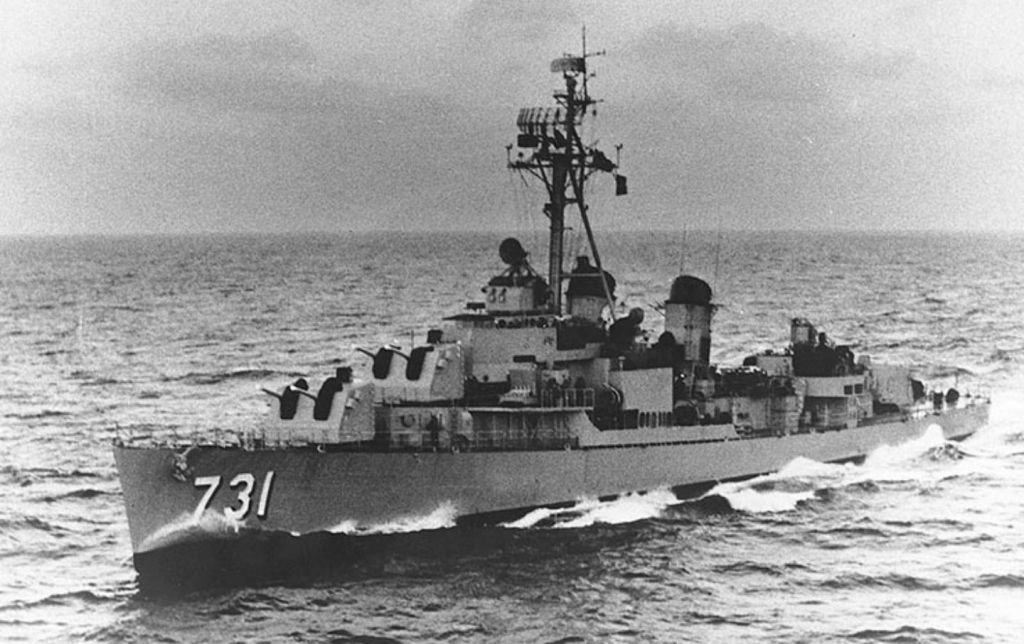 Worst Decision 9 # Gulf of Tonkin Resolution ## Int…
- [WEB] https://www.legion.org/information-center/news/magazine/2013/february/the-mysteries-of-tonkin-gulf
  # The Mysteries of Tonkin Gulf     - [x] Main menu Main menu move to sidebar hide Navigation * [Main page](https://en.wikipedia.org/wiki/Main_Page "Visit the main page [z]") * [Contents](https…
CONNECTIONS
- → SHARES-EVENT Gulf of Tonkin Incident 1964: NSA Study Debunks Second Attack Claim — This dossier examines congressional speed and political pressure; the referenced document details NSA findings on the disputed second attack that informed members' decisions.
- → DERIVED-FROM Gulf of Tonkin Second Attack: Official Acknowledgment of Misattribution by DOD/CIA Officials — Official DOD/CIA misattribution of the second attack is the factual foundation for evaluating whether political pressure prevented Congress from learning the truth.
- → SUPPORTS Gulf of Tonkin Incident: NSA Declassified Intercepts and the August 4, 1964 Second Attack — NSA declassified intercepts directly bear on whether intelligence presented to Congress was complete and accurate.
- → SUPPORTS Gulf of Tonkin Sonar and Radar Recordings: Chain of Custody, Analysis, and Document Preservation (1964–Present) — Chain of custody and preservation of sonar/radar evidence is central to establishing what Congress was or could have known about the second attack.
- → PARALLEL-PATTERN CIA Journalist Relationships and Story Suppression During Vietnam War, Watergate, and Cold War — Both involve alleged executive suppression or selective presentation of information to shape public and institutional understanding during Cold War conflict.