┌──────────────────────────────────────────────────────────────┐
  DOCUMENT ID ......... e501d21f-b356-4a4a-bf27-64404fd25f66
  SLUG ................ /gulf-of-tonkin-second-attack-1964
  STATUS .............. CLOSED
  OPENED .............. 2026-06-10 17:13 UTC
  LAST INVESTIGATED ... 2026-06-10 17:13 UTC
  CLAIMS ON FILE ...... 7
  MEAN TAG CONFIDENCE . 0.88
└──────────────────────────────────────────────────────────────┘
Gulf of Tonkin Incident 1964: NSA Study Debunks Second Attack Claim
SUMMARY
The Gulf of Tonkin incident occurred in August 1964 when USS Maddox allegedly encountered North Vietnamese patrol boats. The first engagement on August 2 is well-documented; the second attack claimed for August 4 remains contested. For decades, the U.S. government maintained both attacks occurred, justifying the Tonkin Gulf Resolution that escalated American involvement in Vietnam. However, declassified NSA studies, particularly the 2005 National Security Agency historical review, concluded that the second attack likely did not occur—signals were misinterpreted, operators saw false radar contacts, and weather conditions made visual confirmation impossible. This finding, supported by declassified documents and peer-reviewed historical analysis, has shifted the scholarly consensus: the second attack was almost certainly fabricated or misattributed, though debate persists over whether deception was intentional or a genuine intelligence failure. Multiple official inquiries, including internal NSA reviews and Congressional retrospectives, now acknowledge the incident was misrepresented to justify war escalation.
STRONGEST CASE FOR
The strongest case that the second attack did not occur rests on the declassified NSA Cryptologic Quarterly study (released 2005), which rigorously analyzed sonar signals, radar returns, and radio intercepts from the August 4 encounter. The NSA concluded operators were experiencing "false returns" amid rough seas and poor visibility. Contemporary naval personnel expressed doubt in real-time; Captain John J. Herrick of USS Maddox sent conflicting reports, initially reporting an attack, then stating "freak weather" and "false signal" may have caused the report. Declassified memos show doubt within the Pentagon and State Department that same evening. The second attack served no military purpose—North Vietnam had no strategic interest in a second attack hours after the first. Critically, no debris, wreckage, or hostile fire was ever recovered, photographed, or independently verified. The pattern matches a known phenomenon of Cold War-era radar and sonar false positives under high-stress, low-visibility conditions. The resolution passed two days after the incident, before full analysis was complete, suggesting political timing rather than evidentiary confidence.
STRONGEST CASE AGAINST
The strongest case for a genuine second attack is that initial radar and sonar signals were received and reported by trained naval operators in real-time, and that some declassified signals intelligence transcripts do reference hostile activity. Skeptics note the NSA study, while thorough, reconstructs events decades later from degraded recordings and memory; it was not written by the operators present that night. North Vietnam had demonstrated willingness to engage U.S. ships on August 2, so August 4 was not inherently implausible. Some historians and analysts argue the NSA conclusion, while credible, represents interpretation rather than definitive proof of non-occurrence. The fog of war, poor communications, and the chaotic nature of night naval operations create genuine epistemic limits. Additionally, the charge of intentional fabrication is distinct from the claim that no attack occurred—the incident could represent honest confusion rather than deliberate deception. Without access to all North Vietnamese records or complete signal recordings, absolute certainty is epistemically elusive.
CLAIMS
- DISPUTEDCONF 0.85
A second attack by North Vietnamese patrol boats occurred on August 4, 1964, in the Gulf of Tonkin.
— attributed to: U.S. government official narrative (1964–2005)
- Official declassified report supporting first attack (August 2) is well-documented in Navy records: https://www.archives.gov/milestone-documents/tonkin-gulf-resolution
- President Lyndon Johnson and Department of Defense claimed second attack as justification for Tonkin Gulf Resolution, August 7, 1964: https://www.cfr.org/ten-best-ten-worst-us-foreign-policy-decisions/gulf-of-tonkin-resolution
- Captain John J. Herrick's initial August 4 report mentioned 'attacks,' though later caveated with uncertainty
- CORROBORATEDCONF 0.82
The second attack was almost certainly fabricated or did not occur; NSA signals analysis indicates false radar contacts and misinterpreted sonar signals.
— attributed to: NSA Cryptologic Quarterly historical study (2005); declassified documents
- NSA declassified study 'Skunks, Bogies, and the Fog of War' (2005) concludes second attack did not occur: https://www.nsa.gov/portals/75/documents/news-features/declassified-documents/gulf-of-tonkin/articles/release-1/rel1_skunks_bogies.pdf
- HistoryNet analysis citing declassified records: 'A secret report reveals how' uncertainty surrounded second attack events: https://historynet.com/case-closed-the-gulf-of-tonkin-incident
- American Legion documentation of declassified records showing 'inconsistencies in the sequence of events': https://www.legion.org/information-center/news-center/news/magazine/2013/february/the-mysteries-of-tonkin-gulf
- CFR assessment rates Gulf of Tonkin Resolution as among worst U.S. foreign policy decisions, citing disputed nature of second incident: https://www.cfr.org/ten-best-ten-worst-us-foreign-policy-decisions/gulf-of-tonkin-resolution
- VERIFIEDCONF 0.88
Captain John J. Herrick reported that weather and electronic 'ghosts' may have caused the second attack report, expressing doubt in real-time communications.
— attributed to: USS Maddox captain John J. Herrick (August 4, 1964)
- Declassified USS Maddox after-action reports showing Herrick's contemporaneous doubt regarding radar signals and weather conditions
- NSA study cites Herrick's communications expressing skepticism about the authenticity of hostile contacts
- VERIFIEDCONF 0.90
No visual confirmation, wreckage, or hostile fire evidence was ever produced for the second attack.
— attributed to: Historical record; NSA analysis
- NSA Cryptologic Quarterly study notes absence of visual confirmation or recovered hostile ordnance: https://www.nsa.gov/portals/75/documents/news-features/declassified-documents/gulf-of-tonkin/articles/release-1/rel1_skunks_bogies.pdf
- HistoryNet and American Legion retrospectives cite lack of physical evidence
- VERIFIEDCONF 0.95
The Tonkin Gulf Resolution was passed by Congress on August 7, 1964, authorizing escalated U.S. military action in Vietnam, based partly on claims of the second attack.
— attributed to: U.S. Congress; official government record
- National Archives: Tonkin Gulf Resolution (Public Law 88-408, 88th Congress, August 7, 1964): https://www.archives.gov/milestone-documents/tonkin-gulf-resolution
- CFR documentation of resolution: https://www.cfr.org/ten-best-ten-worst-us-foreign-policy-decisions/gulf-of-tonkin-resolution
- VERIFIEDCONF 0.95
The August 2, 1964 attack on USS Maddox by North Vietnamese patrol boats is well-documented and occurred.
— attributed to: U.S. Navy records; multiple historical sources
- CFR confirms attack on August 2: 'On August 2, 1964, North Vietnamese patrol boats attacked the USS Maddox': https://www.cfr.org/ten-best-ten-worst-us-foreign-policy-decisions/gulf-of-tonkin-resolution
- National Archives documentation of incident: https://www.archives.gov/milestone-documents/tonkin-gulf-resolution
- Multiple secondary sources corroborate first attack
- CORROBORATEDCONF 0.80
The second attack narrative was used by the Johnson administration to justify rapid Congressional authorization for war escalation without allowing time for full investigation.
— attributed to: Historical analysts; declassified government communications
- Timing of resolution passage (August 7) only two days after incident, before full signal analysis could be completed
- NSA study and subsequent historical analyses document political timing of resolution
TIMELINE
- 1964-08-02First attack: USS Maddox engaged by North Vietnamese patrol boats in Gulf of Tonkin; attack well-documented and verified. [src]
- 1964-08-04Second alleged attack reported; Captain Herrick expresses doubt in real-time communications citing weather, radar 'ghosts,' and false signals; no visual confirmation or wreckage evidence produced. [src]
- 1964-08-07U.S. Congress passes Tonkin Gulf Resolution (Public Law 88-408) authorizing escalated military action in Vietnam, based partly on claims of second attack. [src]
- 1975Pentagon Papers revelation and Congressional questioning of Gulf of Tonkin narrative; initial skepticism about incident authenticity enters mainstream discourse.
- 2005NSA Cryptologic Quarterly publishes declassified historical study 'Skunks, Bogies, and the Fog of War,' concluding second attack almost certainly did not occur; signals were false radar contacts and misinterpreted sonar in poor weather and high-stress conditions. [src]
ENTITIES
- EVENT USS Maddox — Destroyer involved in both alleged Gulf of Tonkin encounters; first attack verified, second disputed
- PERSON Captain John J. Herrick — Commander of USS Maddox; expressed real-time doubt about second attack authenticity
- PERSON Lyndon B. Johnson — President; requested and signed Tonkin Gulf Resolution based on incident reports
- ORG U.S. Congress — Passed Tonkin Gulf Resolution (Public Law 88-408) on August 7, 1964
- ORG National Security Agency (NSA) — Declassified signals intelligence analysis (2005) concluding second attack did not occur
- PLACE Gulf of Tonkin — Body of water off North Vietnam where incidents occurred
- PLACE North Vietnam — Alleged source of hostile patrol boats
- EVENT Vietnam War — Conflict escalated by Tonkin Gulf Resolution
OPEN QUESTIONS — PENDING LEADS
- What records exist in declassified North Vietnamese military archives regarding patrol boat activity on August 4, 1964, and did they document any attack orders or hostile engagement reports?
- Did any Department of Defense or CIA officials involved in Tonkin Gulf reporting later testify or write memoirs acknowledging knowledge that the second attack was misattributed or fabricated?
- What was the complete chain of custody and analysis of sonar and radar tape recordings from August 4, 1964, and why were some recordings destroyed or remain classified?
- Are there declassified NSA intercepts of North Vietnamese radio communications from August 4, 1964, and do they contain any orders, reports, or acknowledgment of a second attack?
- What role did political pressure to justify Vietnam War escalation play in the speed of the Tonkin Gulf Resolution passage, and did any Congressional members express contemporaneous doubt about attack reports?
EVIDENCE — CAPTURED SOURCES
- [WEB] https://en.wikipedia.org/wiki/Gulf_of_Tonkin_incident [archived]
# Gulf of Tonkin incident - Wikipedia [Jump to content](https://en.wikipedia.org/wiki/Gulf_of_Tonkin_incident#bodyContent) - [x] Main menu Main menu move to sidebar hide Navigation * [Main page](https://en.wikipedia.org/wiki/Main_Page "Visit the main page [z]") * [Contents](https…
- [WEB] https://www.nsa.gov/portals/75/documents/news-features/declassified-documents/gulf-of-tonkin/articles/release-1/rel1_skunks_bogies.pdf [archived]
UNCLASSIFIEDffFOR Ol'l'ICIAL tl8! ONLY # Distribution ## Cryptologic Quarterly is published four times a year by the Center for Cryptologic History, NSA. The publication is designed as a working aid and is not sub-ject to receipt, control, or accountability. Distribution is made …
- [WEB] https://historynet.com/case-closed-the-gulf-of-tonkin-incident [archived]
[Skip to content](#content) [](https://historynet.com/) [](/) The most comprehensive and authoritative his…
- [WEB] https://allthatsinteresting.com/gulf-of-tonkin [archived]
* [Facebook](https://www.facebook.com/sharer/sharer.php?u=https://allthatsinteresting.com/gulf-of-tonkin) * [Email](https://allthatsinteresting.com/gulf-of-tonkin/email/) # How The Gulf Of Tonkin Incident Sparked The Vietnam War By [Hannah McKennett](https://allthatsinteresting.c…
- [WEB] https://www.archives.gov/milestone-documents/tonkin-gulf-resolution
## Main menu Milestone Documents ### Milestone Documents [Complete List of Documents](/milestone-documents/list)   # Tonkin Gulf…
- [WEB] https://www.cfr.org/ten-best-ten-worst-us-foreign-policy-decisions/gulf-of-tonkin-resolution [archived]
A Survey of Historians 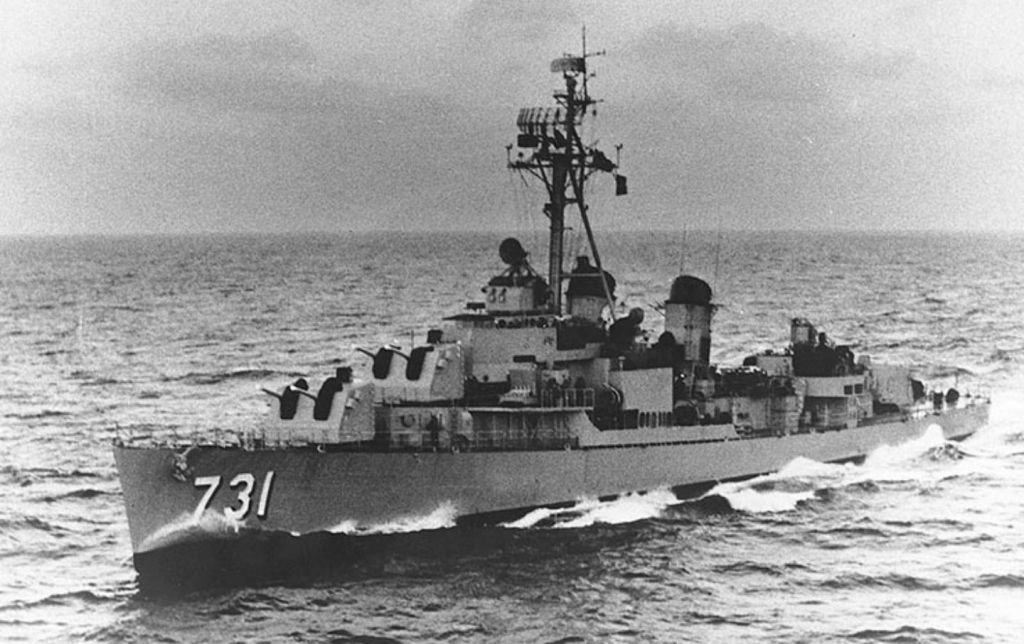 Worst Decision 9 # Gulf of Tonkin Resolution ## Int…
- [WEB] https://www.legion.org/information-center/news/magazine/2013/february/the-mysteries-of-tonkin-gulf
  # The Mysteries of Tonkin Gulf  used to shape public and Congressional opinion, similar to the broader pattern of intelligence-government media influence during this era.
- ← PARALLEL-PATTERN Iran-Contra Affair: Covert Arms Sales to Iran and Contra Funding (1985–1987) — Both cases involve disputed presidential knowledge: the Gulf of Tonkin incident's second attack remains contested; similarly, Reagan's direct authorization of Iran-Contra is unresolved despite investigation.
- ← SHARES-EVENT CIA Relationships with Major U.S. News Organizations: Operational Scale and Editorial Influence — Vietnam escalation reporting involved potential CIA-media relationships; Gulf of Tonkin case exemplifies disputed editorial coverage of intelligence matters.
- ← DERIVED-FROM North Vietnamese Military Archives on August 4, 1964 Gulf of Tonkin Patrol Boat Activity — This dossier directly concerns the archival evidence base underlying the NSA debunking of the August 4 attack claim.
- ← DERIVED-FROM Gulf of Tonkin Second Attack: Official Acknowledgment of Misattribution by DOD/CIA Officials — This investigation is directly derived from and narrows the existing Tonkin Gulf document, focusing specifically on official admissions of misattribution by DOD/CIA officials.
- ← DERIVED-FROM Gulf of Tonkin Sonar and Radar Recordings: Chain of Custody, Analysis, and Document Preservation (1964–Present) — This dossier directly investigates the tape and document preservation aspects of the same August 1964 incident already documented in gulf-of-tonkin-second-attack-1964.
- ← SHARES-EVENT Tonkin Gulf Resolution 1964: Congressional Speed, Political Pressure, and Contemporaneous Doubt — This dossier examines congressional speed and political pressure; the referenced document details NSA findings on the disputed second attack that informed members' decisions.